
Risk management
Protection treaty
Matthew Saunders , of law firm DLA, introduces the bilateral investment treaty which, though often overlooked, can be an effective method of affording legal protection for energy investments and minimising energy project risk
Capital calculations
The latest Committee of Chief Risk Officers white paper offers capital adequacy guidelines for energy merchants. But why should energy firms perform these calculations? Glyn Holton asks whether the CCRO has missed the point
FirstEnergy to blame for US blackout, say reports
Utilities in Ohio – chiefly FirstEnergy – were at fault for the US blackout in August, conclude separate reports from a US-Canadian task force and Michigan regulators. But the midwest system operator does not escape blame. By Joe Marsh
Degreasing palms
The United Nations is likely to ratify extensive anti-corruption legislation in December. But recent scandals at energy giants Elf and Statoil highlight the difficulties in stamping out bribery and corruption. By Joe Marsh
Back to basics
Correlation and volatility methods are accepted ways of measuring risk. But areview of the underlying assumptions underlying the statistics used for risk management can identify areas where errors can occur, says Brett Humphreys
Bound by the rules
In his last day in office, Governor Gray Davis announced the Californian energy crisis was over. Revelations from indicted traders, and the punishments doled out to them, will have a profound effect on how the market moves forward. By Catherine…
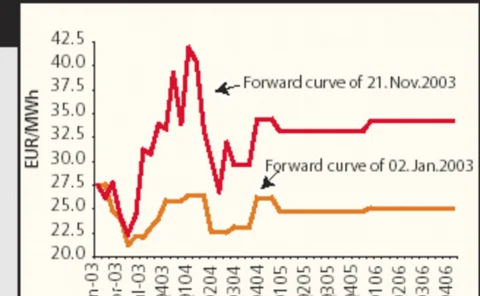
Searching for sellers in 2003
High volatility and rising prices in 2003 clearly above fundamental levels signal the need for improved guidelines from legislative institutions andeasily accessible information

The future of ETRM
As generation, trading and retailing companies come out from under the dark cloud to prepare for what looks to be a brighter future, one issue has become critical – the need to upgrade outdated ETRM systems with 21st century architecture, portfolio…
Creative challenges in customer-driven risk management
Shell Trading’s Ken Gustafson and Jemmina Gualy shed light on the environment in North America for customers and dealers in risk management, and look at the opportunities ahead for the business
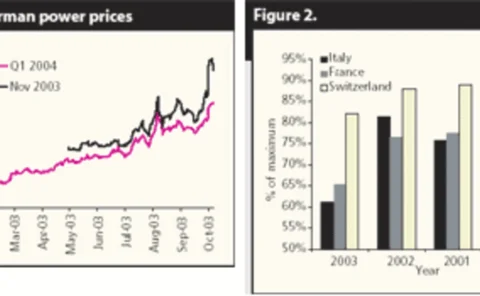
Weathering the problems
Weather derivatives can reduce or eliminate the potential economic disastersthat extreme weather can provoke. Ross McIntyre of Deutsche Bank examines thevarious ways in which weather can affect key industries and reviews the benefitsof weather derivatives

A dark futurefor clearing
Clearing was the energy buzz word of early 2003. But as Clearing Bank Hannover goes into liquidation and the future of EnergyClear’s business remains uncertain, it seems energy clearing has lost its appeal. By Paul Lyon

JP Morgan Chase plans electricity trading foray
JP Morgan Chase is planning to enter power trading, just as the US energy regulator overturns its onerous stock-holding limit rule. PaulLyon reports

The credit charge
Brett Humphreys describes a simple method for charging traders for the credit risk embedded in a contract, using an example based on an oil purchase agreement. Such a charge creates proper incentives for traders with regard to credit risk

Gas prices hit fertiliser industry
North American fertiliser producers are struggling for survival, thanks to the high cost of natural gas. Some have turned to hedging and pre-purchasing their gas, but such measures may not be sufficient. Paul Lyon reports

Farms weather power shortages
Farmers in both hemispheres are struggling to cope with heat waves and droughts while pondering the prospect of future power supply disruptions, finds Maria Kielmas
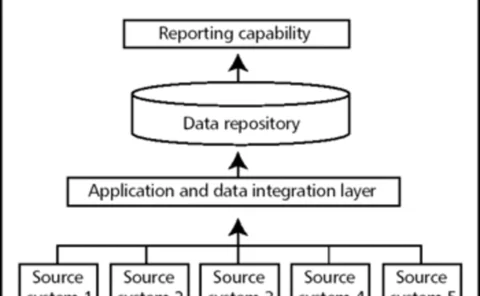
Getting it together
Data consolidation is now a vital foundation to any successful risk management implementation, as Dave Rose and Stuart Cook of The Structure Group report
A true test for value-at-risk
The three classic approaches for measuring portfolio value-at-risk do not compare like with like, argues Richard Sage. Here he presents a test portfolio to highlight the differences between calculation methods

How to be top of the class
Brett Humphreys discusses the attributes that combine to create a best-in-class market risk management division within an energy company

The trouble with normalisation
Weather derivatives practitioners say normalisation agreements between regulators and utilities in the US are posing a threat to their industry. Kevin Foster investigates

A secure base
Long praised as pioneers in the energy derivatives space, US energy firms are now looking to make their overall risk management practices more robust. And, as Paul Lyon discovers, these companies have several innovations up their sleeves, such as…

Lessons in loaning
Lenders and borrowers alike are becoming ever more innovative at a worrying time for energy company financing. But will the new ideas catch on? Paul Lyon reports
Scaling the credit cliff
How are designers of credit risk software reacting to the new credit realities of the energy trading sector? Kevin Foster talks to some leading companies to find out
Standing out from the crowd
Credit risk management groups can differentiate themselves from their competitors through their different capabilities. Randy Baker and Brett Humphreys explain how