
Risk management
Making the grade
As credit risk is now a major concern in the energy industry, EPRM takes a look at CreditGrades, a risk measurement tool from risk analytics firm RiskMetrics
US pipelines follow the market
Todd Shipman of credit rating firm Standard & Poor’s finds that pipeline companies in the US will face more market risk than regulatory risk in the coming year

Enough’s enough
Brett Humphreys takes the guesswork out of determining how many simulations are needed to calculate value-at-risk

Coal on the rocks
Faced with liquidity problems, falling volumes and uncertainty over the accuracy of price data, coal trading has had many of the same difficulties as the natural gas and power sectors over the past year. How can it get back on its feet, asks Kevin Foster

A clear market leader
How will SunGard’s acquisition of rival vendor Caminus change the market for energy risk management software? Kevin Foster reports

Exchanging blows
Conflict in the US and growth in Europe marked another turbulent year for energy exchanges. Kevin Foster casts an eye back over 2002
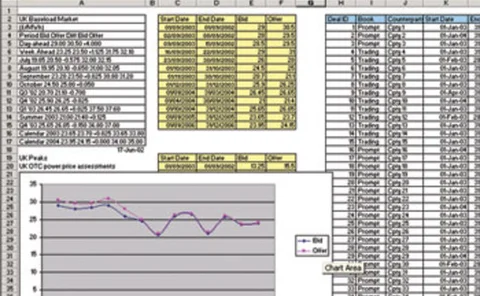
Getting stressed
To understand how much value can be lost from a position in the energy markets, we need to use measures other than value-at-risk. Brett Humphreys discusses methods for creating effective stress tests
Hedging on a jet plane
The past eighteen months has been a critical time for airlines. FAME Information Services looks at how an airline can reduce operating costs by jet fuel hedging


Rising fuel costs, diving profits
Airlines differ on how to manage jet fuel price ‘hyper-volatility’ as option prices point to more turbulence ahead. Catherine Lacoursière reports
Cell mates
Traders love spreadsheets. But complex deals can quickly outgrow a sheet developed on the fly. Since traders won’t abandon their favourite tools, Stuart Cook and Tony Hughes of The Structure Group look at how firms can control their use
The front-month proxy hedge
The front-month proxy hedge is a correlation-based hedge that seeks to neutralise the aggregate sensitivity of a portfolio to a futures curve by converting the individual futures hedges into a single hedge with respect to only the front-month contract…
A new look at credit risk capital
In the second of two articles on Standard & Poor’s refinement of analytical methodology, John Kennedy discusses an updated approach to evaluating credit risk capital
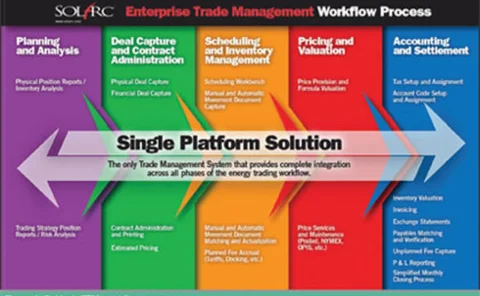
Capturing value from energy supply and trading
Companies that plan to engage in energy trading need to invest in the right personnel, processes and information management tools if they intend to be successful, says David Dunkin, SolArc’s Chief Strategic Executive
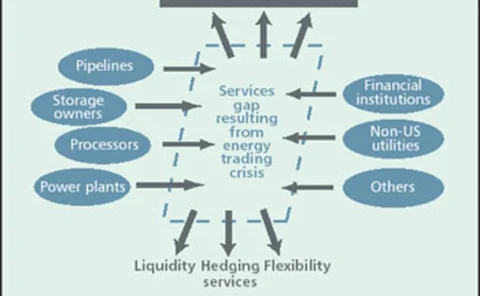
Who is left to manage risk?
The exodus of energy trading companies from the market has created a gap in managing risk. David Johnson and Ross Warriner of Protiviti report
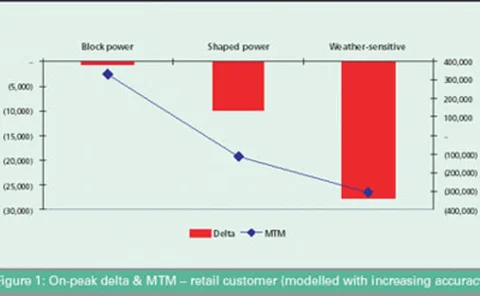
New Energy Associates, a Siemens Company, presents the future of ETRM
As generation, trading and retailing companies come out from under the dark cloud to prepare for what looks to be a brighter future, one issue has become critical – the need to upgrade outdated ETRM systems with 21st century architecture, portfolio…
Quality data and solutions for a challenging market
FAME provides today’s uncertain energy market with transparent information and the tools to analyse it
A safety net for energy traders
Will the Edison Electric Institute’s master netting agreement help reduce credit risk for energy traders? Kevin Foster takes a look at this new initiative

How much can you take?
Given recent events, energy firms need to fundamentally re-think how they estimate their risk tolerance. Maria Kielmas asks what has prompted this soul-searching
El Paso helps RiskMetrics adapt
RiskMetrics Group, a company more often associated with the financial sector, is implementing its risk solution software at energy firm El Paso Corp. How is it adapting the software to the specifics of the energy sector? Kevin Foster reports

All clear for energy
Several organisations have brought over-the-counter clearing to the US energy markets over the past six months. Kevin Foster assesses their progress and asks whether they can all survive