Past disasters can prove the value of energy risk management
Analysing failures and losses at energy firms can underscore the value of consistent, high-quality risk management
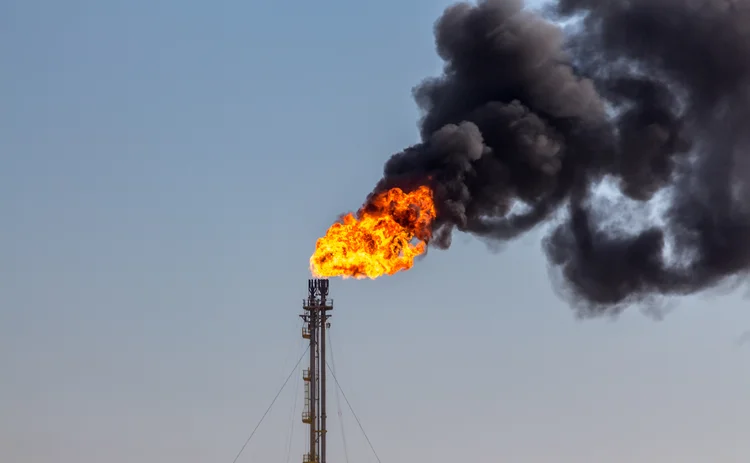

Proving the value that risk management brings to entities is frustratingly difficult, if not virtually impossible. When the risk management function runs optimally and risks are avoided or mitigated efficiently, the department draws little attention. Only when things go wrong does it attract the gaze of the board.
As energy risk veteran Vince Kaminski says in this interview with Energy Risk: “A failure of risk management is obvious; the successes remain hidden.”
Yet proving the value of the risk management function to the board is essential if the department is to get the budgets and funding necessary to keep improving.
Kaminski suggests there is enormous merit in looking back on some of the biggest disasters and losses in energy risk management over the years and analysing where basic risk-management principles were violated. This is not just an exercise in learning from the mistakes of others, but a practice in gathering “indirect, circumstantial proof of the contribution of risk management to the bottom line,” he says.
Over the 30 years that Energy Risk has been following energy markets, it has reported on a fair number of blowouts and disasters. As part of our 30-year anniversary series, Energy Risk is revisiting some of its coverage, looking back at the developments that shaped today’s markets.
In this article first published in 2014 , Alexander Osipovich takes a detailed look at the risk management failures behind 10 of the biggest energy debacles that took place between 1993 and 2010:
- Metallgesellschaft in 1993–94
- US Midwest power price spike of 1998
- The California energy crisis of 2000–01
- The collapse of Enron in 2001
- The merchant meltdown from 2002
- China Aviation Oil in November 2004
- Amaranth Advisors in 2006
- Ceylon Petroleum Corporation in 2008
- Constellation Energy in 2008
- Deepwater Horizon in 2010
Click here to be taken to the article.
More on Risk management
Energy risk teams adapt hedging practices amid volatility
Risk managers at European power and gas firms are taking new approaches to hedging amid today’s turmoil and uncertainty. Mark Nicholls reports
CRO interview: Antoine Servais
MET Group's Antoine Servais discusses the impact of geopolitical risk on his workflow, his approach to volatility, and the challenges of leading risk management at a rapidly expanding organisation

Energy supply chain challenges prompt risk management rethink
As supply chain challenges grow, energy risk managers are taking a more dynamic and holistic approach to managing and anticipating supply chain risk, say Sapna Amlani and Stephen Golliker at Moody’s

Energy Risk Europe Leaders’ Network: the challenge of unpredictability
The European Leaders’ Network, sponsored by Engie, convened in London on June 29, 2026, and focused on the impact of geopolitical tension, price volatility and policy uncertainty on European energy markets.

Break down silos to manage geopolitics – risk managers
Risk Live: Experts says scenario planning helps identify who has information needed in a crisis

Treat AI models as would-be hackers, says quant
Risk Live: Models capable of “strategic deception” require different risk management, says former Risk.net quant of the year

AI autonomy may redefine risk management roles
Risk Live: Machine validation of autonomous processes may emerge “relatively soon”, EIF risk chief says

Managing extreme volatility in commodities
Persistent volatility requires a rethink of technology architecture, says Murex head of market risk practice