CRO interview: Shawnie McBride
NRG’s chief risk officer Shawnie McBride discusses the challenges of increasingly interconnected risks, fostering a risk culture and her most useful working habits
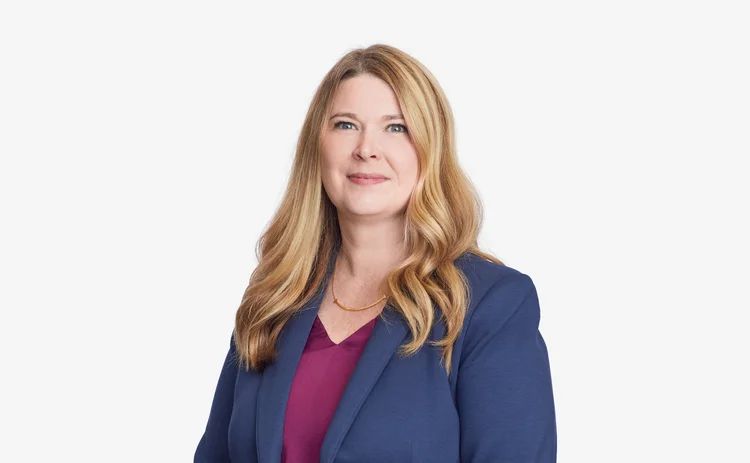

In her 30 years in the energy industry, Shawnie McBride, chief risk officer of North American power company NRG, has helped companies adapt to a host of radical changes – from the shale revolution to the 2008 financial crisis, from Covid-19 to today’s geopolitical upheaval.
The dizzying pace of change in the energy industry is why she finds energy risk management so engaging, she says. “Being part of something so dynamic is never boring!”
McBride’s past experience spans sales operations, IT and wholesale commercial positions at a variety of US energy firms, all of which provide useful insights for her current role and inform her approach to risk management, she says.
Here she shares her thoughts on everything from current risk management challenges to the benefits of colour-coding her calendar.
What’s the biggest challenge for the US power sector right now?
It’s the much-talked about demand-driven growth coming at the same time as supply constraints. The concern is that supply growth can’t keep pace with demand growth coming from electrification, onshoring of manufacturing, artificial intelligence and data centres. We’ve had periods of very low volatility and very low prices, which disincentivised the manufacture of goods like turbines and transformers. Now that’s having to ramp back up in an environment where there’s heightened geopolitical risk, trade policy uncertainty, supply chain issues and so on.
So, it’s important we manage regulatory change, advocate for grid reliability and really focus on consumer affordability. This uncertainty requires we plan for a myriad of outcomes and position ourselves in the best way to support our customers, both large and small. NRG is unique in that we have a very large residential consumer portfolio, and we also serve very large loads; we need to be able to do both those jobs.
What specifics do you push for when you advocate for grid reliability?
We want to help alleviate the constraints that would be on the grid at any given point in time, as much as we can, for the customers we serve. So, it’s about transparency, reliability and backup generation. And it’s making sure that everyone takes on their fair share of the cost associated with this.
How much do you consider advocacy to be the role of the risk manager?
I work closely with our regulatory, government affairs and advocacy groups in the different markets we operate in. Our role is to gain an understanding, based on the protocols or things that we review, of our position. It’s not just the risk team, but commercial, legal and others that all come together to form the scenarios of things that could happen, so that we can formulate a point of view. And in providing our responses, we’re really trying to advocate for consumers at the end of the day.
We want to help alleviate the constraints that would be on the grid at any given point in time, as much as we can, for the customers we serve. So, it’s about transparency, reliability and backup generation
As a risk manager, do you help with decisions around the supply stack?
All the time. NRG owns generation, we have off-take arrangements and we trade financially, so we’re always making decisions about whether we want to own, rent, or buy flexible products. The hedging strategy is a key part of what my team does, working with the commercial teams and making sure decisions are made with the right risk appetite lens.
As NRG covers all of North America, we need to understand regional supply and demand outlooks, but also different regulatory regimes. The Texas Ercot region is where we have the bulk of our customers and our generation. It’s a very competitive, yet still highly regulated, market with the biggest proliferation of renewables. In the northeastern markets, there is also a high amount of regulation with additional considerations resulting from capacity or transmission charges or renewable portfolio standard requirements at the state level.
Some 90% of new US power generation capacity added in 2025 was renewables. Do you think this rate will continue given changes in US energy policy and, if so, how does the market deal with the challenges that presents?
Renewables play an important role in generating sustainable, affordable supply, and we did see a significant rise in their development in the past decade. However, they introduce a different type of risk due to the intermittency. When the wind isn’t blowing or the sun isn’t shining, we need reliability and a way to continue to meet load demand in real time. So that’s where backup generation or more flexible product structures, demand response and batteries really come into play.
Thermal is the viable option for building new generation because it can respond very quickly. The new turbines coming out these days are highly efficient. The challenge is there’s a long queue for them, but thermal is a grid-friendly, reliable, dispatchable product. We need a healthy mix of generation supply to support the growing demand for energy.
What’s the biggest change to affect energy risk management that you’ve seen over your career?
The first one is how interconnected all the different risks are these days. For the first time in 20 years, we’re seeing demand growing very quickly, which has increased the importance of fundamentals. There’s now a need for different fundamental scenarios to gain an understanding of what is likely to happen under different conditions. As the industry strives to meet the demand, many other factors come into play such as economics, trade policy, regulatory shifts, supply chain risk. Traditional risk management used to be focused mainly on financial markets but now there’s so much interconnectedness with supply and demand fundamentals. The rise of analytical tools is really helpful here.
Thermal is the viable option for building new generation because it can respond very quickly. The new turbines coming out these days are highly efficient. The challenge is there’s a long queue for them
Shawnie McBride, NRG
The second area of huge change is in the technology space. We’ve been working with big data since the early 2000s, but the latest advances involving data lakes, analytics and unified data layers help people connect dots very quickly across structured and unstructured data. Whether it’s customer data, market data, liquidity data, regulatory changes, operational data, there’s just a wealth of insight. And then technology today allows us to speed up data analysis. It may also allow us to see certain connections that we couldn’t before. For example, how is commodity risk driving some of our supply investment decisions and our supply chain? Does it give us an insight into how to diversify our earnings profile?
What things are you using AI for?
We’re finding that using AI to do analytics and to automate processes frees up the human capital to do more, to be curious and ask the right questions to gain insights. I tell my team to think about the portfolio not the process, and to be creative about looking at internal and external connections. This then builds a natural validation tool because as new things get added, you see the portfolio change, and you can validate whether it should have or not. I know a lot of people are concerned about AI – rightly so – so it’s important to have the right policy and governance in place.
What has surprised you most about working in energy risk management?
I’ve been in this industry 30 years and nothing surprises me anymore! What keeps me engaged in energy risk management is the pace of change. There’s been so many market eras – the financial crisis in 2008, the shale explosion, LNG – and what’s really required is resiliency and being able to adapt. The innovations driving the industry are impressive and being part of something so dynamic is never boring.
What do you see as the biggest challenges for energy risk officers today?
I think it’s the wide distribution of outcomes due to the many different criteria impacting energy firms today. It can be hard to know what you’re rooting for. It’s all about managing these distributions. When you have two different scenarios that can create the same P1 probability loss event, it’s hard to know which side of that you want to be on. We don’t want extremes – we want the right weather, the right amount of renewables, prices that allow visibility into exactly where the portfolio performs best – but we need to keep an eye on all these variables at once. So, I think quantifying that uncertainty involves strong analytical tools and then leveraging your limits or your governance structure to make sure you stay within a certain range. That may mean protecting some of the tails by buying insurance. You then need to work out how much to spend so that you don’t give away opportunities.
Making sure I’m connecting with people in the organisation who are passionate about what they do and who want to talk about the ways in which we protect our people, our customers, our company, our assets – that’s all risk management, even if they don’t think of it that way
How do you prove the value of risk management to the board?
We have the usual enterprise risk discussions quarterly, but I feel our board really finds the biggest value in deep dive conversations. Every quarter we hold meetings on special topics that are relevant for either something that’s emerging or something we really want to test our risk tolerance on. It’s very hard for someone to say what their risk appetite is if they don’t have enough of the context. So, we try to structure tabletop exercises or maturity assessments of each of these risks or interdependency risks. A particular risk may not make its way to the top risk register, but it might have an interdependency on things that are there.
The meetings allow us to put out a scenario and ask if the board is comfortable with it. Then we can change the parameters slightly and see if they are still comfortable. This way we test for their risk appetite, which may not be what we, or they, thought it was.
I think this helps shape our governance structure and gives them confidence that we understand our risks and that we’re managing them. And it also leverages our board members’ expertise.
How do you foster a risk culture?
For me, the biggest thing is partnerships and building trust. It takes time, but making sure I’m connecting with people in the organisation who are passionate about what they do and who want to talk about the ways in which we protect our people, our customers, our company, our assets – that’s all risk management, even if they don’t think of it that way. It’s really about tapping into them – maybe adopting their language – and really understanding their goals. We need to have discussions to identify what might derail their strategy, what contingency plans might be needed, and potentially advocate for them on something they’re trying to accomplish that we also agree with. We work hard to build those relationships. We do apply traditional risk management tools like scenario analysis, sensitivity, bow ties, but we usually don’t refer to them like that as it can shut down conversations. We prefer to use a common language and tailored risk assessments.
Establishing this network of risk owners means we can adapt very quickly to changes and ensure that our risk appetite is always aligned to a strategy. It’s a living, breathing risk culture that we have, not something done just once a year. Part of this is those deep-dive topics we bring to the board that give people a platform to talk about what’s really concerning them and what they need support with.
It sounds amazingly simple, but I do it with purpose and I wear an executive hat first and then a CRO hat, and I think that helps me keep perspective of what we’re trying to do as a business. I feel a lot of my role is helping people figure out what could go wrong and how we could plan for that.
As a risk manager, how do you steel yourself to have uncomfortable conversations?
I find that I thrive in change and chaos and that is perfect for the industry at this moment in time
I actually don’t find saying no uncomfortable. I ask a lot of questions so I understand the situation and then I’ll know if something isn’t going to quite fit into our tolerance or risk framework. The questions I ask usually bring the person to the same conclusion if the risk reward isn’t worth it. It can also help them to think about the next opportunity differently. It’s all about putting things in the context of, have we thought about the operational applications, have we thought about the regulatory implications? Where does this deal stand if the rules change? In many cases you can contract for these things, so it can be just about putting in extra guard rails.
Asking questions and helping them get to the conclusion is not me saying no, it’s us getting to the final product as a team. By approaching it that way, I tend to get involved in new activity that nobody has looked at from a risk point of view. If you are seen as the bridge between the business and the control functions, people know they can come to you to help with that connection.
What are your most useful working habits?
I make my calendar work for me. I actually colour code it using Outlook to categorise how I’m spending my time. That way I can see at a glance how much time I’m spending on, for example, relationship building, strategy building, external issues and so on. That way I can try to balance the time I spend on tactical problem solving, strategising, influencing or connecting.
Is there any part of your job that you can’t let go of outside office hours?
I am obsessed with an app that does ISO [independent system operators] prices and looks at supply and demand and the current stack – for example, is wind setting the marginal price or is it gas? I look at that all the time, especially in these days where the 10pm to midnight hours are getting quite pricey. I like to monitor how frequently prices hit $500 a megawatt-hour. I don’t doom scroll social media, but I do look at Ercot prices!
Would you look at it on holiday?
Absolutely! I can’t help it!
Would you set alarms on it to wake you up if anything strange happened?
No, I’m not that bad, yet!
What do you find most stressful about your job?
Keeping up with so much information. There’s so many changes in all the markets we operate. I need to know what exactly a rule change will do to the portfolio, and what we think is going to happen. For example, Ercot’s new Real-Time Co-Optimization + Batteries (RTC+B) framework is being rolled out now. We need a full understanding. Thank goodness I have a strong team and strong partnerships across the organisation.
Which of your personality traits do you think have contributed most to your success?
One of the biggest things I learned early in my career was influential leadership and really leveraging that. I think I’m naturally curious and I just love learning. I like puzzles. I like new things. And so, I find that I thrive in change and chaos and that is perfect for the industry at this moment in time.
More on Risk management
Energy risk teams adapt hedging practices amid volatility
Risk managers at European power and gas firms are taking new approaches to hedging amid today’s turmoil and uncertainty. Mark Nicholls reports

CRO interview: Antoine Servais
MET Group's Antoine Servais discusses the impact of geopolitical risk on his workflow, his approach to volatility, and the challenges of leading risk management at a rapidly expanding organisation
Energy supply chain challenges prompt risk management rethink
As supply chain challenges grow, energy risk managers are taking a more dynamic and holistic approach to managing and anticipating supply chain risk, say Sapna Amlani and Stephen Golliker at Moody’s

Energy Risk Europe Leaders’ Network: the challenge of unpredictability
The European Leaders’ Network, sponsored by Engie, convened in London on June 29, 2026, and focused on the impact of geopolitical tension, price volatility and policy uncertainty on European energy markets.

Break down silos to manage geopolitics – risk managers
Risk Live: Experts says scenario planning helps identify who has information needed in a crisis

Treat AI models as would-be hackers, says quant
Risk Live: Models capable of “strategic deception” require different risk management, says former Risk.net quant of the year

AI autonomy may redefine risk management roles
Risk Live: Machine validation of autonomous processes may emerge “relatively soon”, EIF risk chief says

Managing extreme volatility in commodities
Persistent volatility requires a rethink of technology architecture, says Murex head of market risk practice