Data and analytics house of the year, Asia: Orbital Insight
Energy Risk Asia Awards 2019: Geospatial analytics leader expands Asia offering

It’s hard to believe analysing shadows could open up a whole new window on global oil supply, but geospatial analytics company Orbital Insight has done just that.
The company applies artificial intelligence and machine learning to information gathered from more than 200 satellites to monitor the world’s oil storage tanks. Its coverage of more than six billion barrels of oil storage capacity provides users with the ability to quantify inventories down to individual storage tanks in hubs in countries including China and the US, as well as members of the Organisation of Petroleum Exporting Countries (Opec). Orbital Insight also uses connected device data to track refinery outages and anomalies at petrochemical and liquefied natural gas (LNG) facilities.
This information comes from satellites, as well as drones, balloons and even by pinpointing cell phone locations. For oil inventories, optical satellite signals use light to measure the shadows cast by tanks and by their floating roofs to derive size and fill rates.
“The roofs float in line with the level in the tank to make them air tight – for a variety of reasons, including safety,” explains Michael Lapides, Orbital Insight’s Palo Alto-based marketing director.
“The shadow cast outside of the tank is used to calculate its size. The shadow cast inside the tank is used to calculate how much is being held - the bigger the shadow the lower the volume. We look at the shape of these shadows and then use computer vision to identify and feed the information into an equation that calculates the fill rate of the tank.”
More expensive radar technology can be used to get the same information if tanks are in locations that lack the necessary light, such as cloudy regions. “Radar is a high-accuracy, low-revisit signal so it’s best deployed to key storage terminals,” Lapides continues, referring to how frequently a satellite returns to observe the same point. “But by using those complimentary data sets, we can achieve a very focused but reliable signal.”
This technology is used on a daily basis to scan satellite images in real time to detect and measure oil tanks and feed this information into a machine learning algorithm. It also picks up new tanks as they are created as well as detecting those that are no longer in use and deleting them from its data feeds, says Lapides. As a result, Orbital Insight has built up a treasure trove of real-time global oil intelligence.
This information gives users a sharper read on global oil inventories and Orbital Insight has continued to add functionality this year, enabling users to isolate and measure specific tank clusters.
“So rather than looking at Cushing, for example – everyone has that data – we can focus on areas like Odessa in Texas, the Dalian region in China, or the Ras Tanura export terminal in Saudi Arabia, which has been very important lately in light of the recent attacks [on two Saudi Aramco plants last September],” says Lapides. “This has been a game-changer for clients in the midstream and physical trading space.”
Orbital Insight’s data and analytics can be accessed via several subscription types, including SaaS or API platforms, as well as through the CME Group and Bloomberg. It also publishes an oil-storage index on its website. Lapides says his firm is “democratising data for the world to use in analytical models” and providing “radical transparency into historically opaque regions, such as Opec and China”.
This was especially useful following the September attack on Saudi Aramco’s Abqaiq and Khurais oil processing facilities. As the markets scrambled to assess the damage in Saudi Arabia and the ability of other regions to make up any supply shortfall, Orbital Insight was able to provide an overview of Saudi oil stocks and global inventories.
The company has expanded into key Asian energy hubs in recent years, most recently opening a Singapore office in June 2019. It already has a presence in London, Tokyo and New York – all with active client bases for energy products, says Lapides. Current subscribers include quantitative and fundamental hedge funds, oil majors, traders, banks and midstream players.
He adds that regional users tend to want to understand local-level supply issues, while hedge funds are often looking for pricing anomalies. Here, Orbital Insight’s data can provide a head start on the rest of the market as it waits for data such as the International Energy Agency’s weekly Oil Market Report. However, “the one thing all of our clients tend to have in common,” Lapides says, “is a desire to get a global perspective on oil storage.”
More on Gas/LNG
The spread of agentic AI in energy trading
Jay Bhatty, CEO and founder of NatGasHub.com, discusses agentic AI in commodities workflow

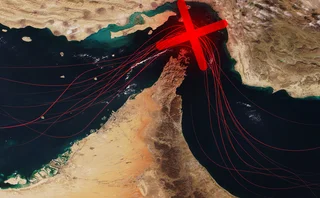
A Hormuz tipping point may be days away
Agent-based model suggests delays and shortages likely to accelerate after four weeks
Energy Risk reaction: Impact of Middle East conflict on hedging and longer term risk
Energy Risk talks to Riccardo Rossi at Centrica Energy and Rob McLeod at Hartree Partners about the impact of the Iran crisis so far on firms exposed to energy
Energy Risk Europe Leaders’ Network: geopolitical risk
Energy Risk’s European Leaders’ Network had its first meeting in November to discuss the risks posed to energy firms by recent geopolitical developments

Energy Risk US Leaders’ Network: tackling volatility
Energy Risk’s inaugural US Leaders’ Network convened in Houston in October to discuss risk management challenges caused by geopolitical upheaval, policy uncertainty and volatility

LNG trading strategies set to change amid major market shifts
The global LNG market is on the brink of significant changes set to alter trading dynamics and market behaviour, say analysts
Energy Risk at 30: Learning from the past
Energy Risk looks back at the seminal events and developments that have shaped today’s energy markets

Natural gas/LNG house of the year: ENGIE
Energy Risk Awards 2025: Energy firm signs a string of innovative deals in established and fledgling gas markets