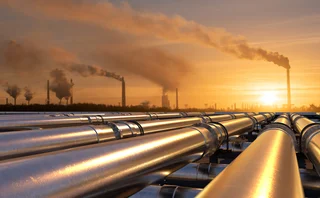
Crude hits all time high of $88, more upside seen
“The risk of $100 oil is now greater than the risk of $60 oil,” said Francisco Blanch, London-based commodity strategist at investment bank Merrill Lynch. “Inventories are much lower than they were this time last year, production globally has contracted yet the demand picture still looks strong,” he said.
Merrill recently revised its fourth quarter crude price forecast from $67.50/bbl to $80/bbl.
At one point November West Texas Intermediate crude, the benchmark US contract, traded at $88.20 /bbl on the New York Mercantile Exchange, a new record. It ended the day at $87.61. On Monday, London's Brent North Sea crude for November delivery at one point soared to a fresh all-time high of $84.48 dollars per barrel on the London-based ICE Futures Europe exchange.
Key to the climbing price is a border dispute between Turkey and Kurdish rebels in northern Iraq. Various news reports cited Turkish Prime Minister Recep Tayyip Erdogan saying last week that he was ready to "act" against Kurdish bases in northern Iraq, which are near large crude-oil pipelines. The Turkish government met Monday to prepare a motion seeking parliamentary approval for a military incursion into neighbouring Iraq to crack down on Kurdish rebel bases there.
Falling inventories are also behind the price rise. A U.S. Energy Department report showed the nation's crude stockpiles unexpectedly fell 1.67 million barrels in the week that ended Oct. 5, instead of the 1.08-million-barrel gain that had been expected. According to the International Energy Agency (IEA), global fuel inventories fell below a five-year average last month, a period when they typically rise.
In its monthly report released Monday, the Organization of the Petroleum Exporting Countries (OPEC) predicted non-OPEC countries will produce 110,000 fewer barrels of oil per day than expected in the fourth quarter, even as demand for crude oil will grow by 100,000 barrels a day compared with last year.
In a statement, the organisation nevertheless said that the current price spike was not supported by fundamentals.
"While the Organization does not favor oil prices at this level, it strongly believes that fundamentals are not supporting current higher prices and that the market is very well supplied," said OPEC Secretary-General Abdalla Salem El-Badri.
More on Oil & refined products
Oil and products house of the year: Macquarie Group
Energy Risk Awards 2026: Bank’s physical oil capabilities allow it to create vital flexibilities for clients facing tumultuous markets

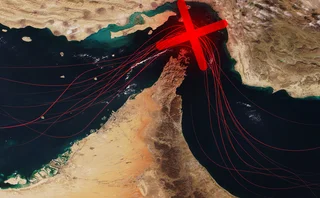
A Hormuz tipping point may be days away
Agent-based model suggests delays and shortages likely to accelerate after four weeks
Energy Risk reaction: Impact of Middle East conflict on hedging and longer term risk
Energy Risk talks to Riccardo Rossi at Centrica Energy and Rob McLeod at Hartree Partners about the impact of the Iran crisis so far on firms exposed to energy

Iran strikes a stress test for CCP margin models
CME’s Span2 and Ice’s IRM2 are performing as advertised. The next few days could test their mettle

Energy Risk reaction: Venezuela and oil sanctions
Energy Risk talks to Rob McLeod at Hartree Partners about the energy risk implications of the US’s control of Venezuelan oil
Energy Risk Europe Leaders’ Network: geopolitical risk
Energy Risk’s European Leaders’ Network had its first meeting in November to discuss the risks posed to energy firms by recent geopolitical developments

US shutdown leaves commodity traders without key data
Commodity traders are ‘flying blind’ without Commitment of Traders reports

Energy Risk at 30: Learning from the past
Energy Risk looks back at the seminal events and developments that have shaped today’s energy markets