Energy stirs political passions around the globe
Keystone XL, Russia, position limits and the ‘big six’ draw strong views

Other than food, water and air, it is hard to think of something as crucial to the modern economy as energy. For this reason, the politics of energy are every bit as interesting as the physical processes of converting, transferring and storing it.
Around the world, the politics of energy stir strong passions. Just look at Russia's attempts to throw its weight around in eastern Europe, and the heated environmental opposition to the construction of the Keystone XL Pipeline in North America.
Energy prices are a particular bone of contention. In the UK, where the electricity market is being probed by the Competition and Markets Authority (CMA), there are long-held suspicions that the 'big six' suppliers have been exercising their influence to keep wholesale prices high and stamp out competition. Whether this is actually happening is unclear. An update released by the CMA on February 18 paid more attention to criticisms of the country's retail market, which is bedevilled by low rates of switching between suppliers.
Most sparks tend to fly over oil. The record high oil prices seen in mid-2008 are often cited by supporters of plans by the US Commodity Futures Trading Commission (CFTC) to impose speculative position limits on commodity derivatives. But a September 2008 report by the CFTC showed the level of speculative interest in oil actually diminished as prices increased that year.
More recently, speculators are being blamed for creating the opposite effect. On February 19, Brent North Sea crude oil futures closed at $60.21 a barrel on Atlanta-based Ice, down 48% compared with their previous closing high in June 2014.
Amid the decline, developing economies are being urged to use the comfort of cheaper oil to move away from fossil fuel subsidies. Such a strategy makes sense; after all, it is a lot easier to mend the roof while the sun is shining.
Careening oil prices also provided plenty of discussion at International Petroleum Week in London in early February. Among the speakers was Igor Sechin, president and chairman of Moscow-based oil giant Rosneft, who predicted low prices would give rise to an excessive reduction in investment and a shortage of oil by as early as the fourth quarter of 2015. The oil market no longer reflected physical reality, he claimed, and was distorted by a proliferation of paper trading and Western economic sanctions against Russia.
All of which proves the politics of energy, while fascinating, are rarely subtle.
More on Oil & refined products
AI boom turns Morgan Stanley into a hot commodity
Talking Heads 2026: Data centres need long-dated power and gas hedges that only a big bank can provide
Oil and products house of the year: Macquarie Group
Energy Risk Awards 2026: Bank’s physical oil capabilities allow it to create vital flexibilities for clients facing tumultuous markets

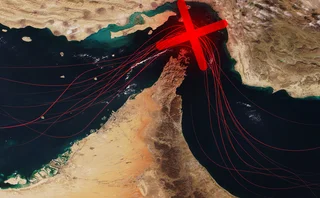
A Hormuz tipping point may be days away
Agent-based model suggests delays and shortages likely to accelerate after four weeks
Energy Risk reaction: Impact of Middle East conflict on hedging and longer term risk
Energy Risk talks to Riccardo Rossi at Centrica Energy and Rob McLeod at Hartree Partners about the impact of the Iran crisis so far on firms exposed to energy
Iran strikes a stress test for CCP margin models
CME’s Span2 and Ice’s IRM2 are performing as advertised. The next few days could test their mettle
Energy Risk reaction: Venezuela and oil sanctions
Energy Risk talks to Rob McLeod at Hartree Partners about the energy risk implications of the US’s control of Venezuelan oil
Energy Risk Europe Leaders’ Network: geopolitical risk
Energy Risk’s European Leaders’ Network had its first meeting in November to discuss the risks posed to energy firms by recent geopolitical developments
US shutdown leaves commodity traders without key data
Commodity traders are ‘flying blind’ without Commitment of Traders reports