Commodities Research House of the Year, Asia – Barclays Capital
Commodities Research House of the Year, Asia – Barclays Capital
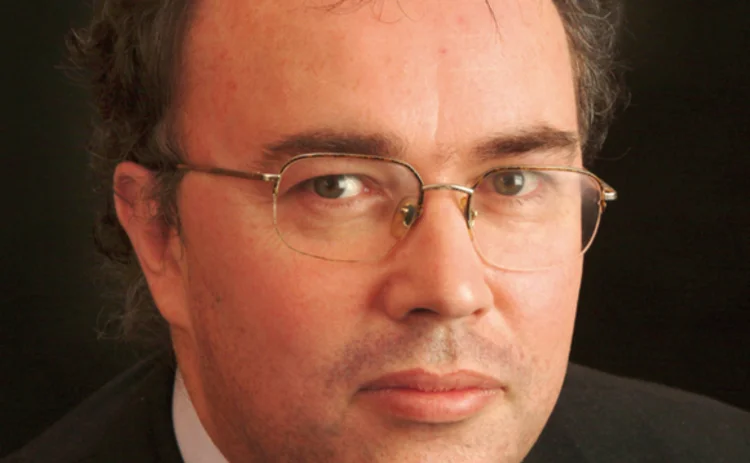
While some of Barclays Capital's Asian commodities coverage is completed from its London office, it also has a team based in Singapore, which is led by Yingxi Yu. Also co-lead for the bank's coal coverage, Yu has been with the commodities research team for seven years and is a cross-commodities analyst, contributing to daily, weekly and quarterly publications.
As client demand for information and meetings grew over the past year in Asia, the team added a second researcher in Singapore. Paul Horsnell, head of commodities research at Barclays Capital, explains: "It was getting to the point where it was a challenge for us to manage the sheer quantity of client requests with a single researcher in Singapore. So a second helps us to cover more clients, given the scale and growth of demand over the course of the past two years." This is supplemented by additional visits to the region by other members of the team for client presentations.
Horsnell expects interest in the services the team can provide to continue to grow. "Obviously this will be determined by the growth of the overall business, but it's become fairly clear straight away that, even with the second researcher, both are fully employed. We certainly continue to find strong and growing interest across the commodity sector in Asia, but particularly on the energy side."
The launch of Global Gas Explorer in June 2010, which is a brand new report focused on the liquefied natural gas (LNG) market, provides a good example of how analysts in different regions take both a regional and a global view in developing research and analysis for clients. "We felt that getting a proper fix on LNG was becoming increasingly important for all of the regional markets. Horsnell says, adding that while is it not yet "perfectly formed", the report aims to examine likely flows and precisely monitor and explain the inter-regional aspects running through the global LNG market.
Horsnell believes this type of inter-regional co-operation among the members of the commodities research team is an important aspect to their offering. The approach results in a cross-fertilisation of ideas that helps Barclays Capital to maintain coverage of the global energy and commodities markets. But the benefits of having researchers "on the ground" to cover specific issues from a regional point of view should not be underestimated either, hence the decision to establish and grow a team in Asia.
Not only can the Asia-based researchers get a ground-level view of regional events, they can also present to clients in Mandarin, as well as English. "We found that a lot of the incremental demand for research came from clients who wished to see presentations in Mandarin," says Horsnell. "That's probably one of the biggest areas of demand growth and it's very hard for us to address the full range of client demands in Asia, and add value in terms of the overall impact of the presentation, if it is only in English."
Overall, the research team prides itself on its commitment to developing commodity research talent. The Barclays Capital graduate programme has provided six of the current 17-strong global commodities research team, including five of the 12 energy researchers. The average length of service for the energy team is four years. Horsnell attributes this to providing a clear career path and allowing analysts to build up a strong profile among clients by conducting research and authoring reports from the early stages of their career. "We make it clear that there is a chance for career progression. Plus, in the junior part of their career, researchers are not just here to compile data, they get coverage and can work on publications to build up a profile among clients at their own pace."
Clients benefit from this strategy, according to Horsnell, because it increases the talent pool that they have access to and allows them to tap into a stream of new ideas presented under a consistent framework. "We place a high value on deepening our talent pool," he adds, "and that organic growth leads to distinctive research and analysis."
Click here to view the article in PDF format
More on Risk management
Energy risk teams adapt hedging practices amid volatility
Risk managers at European power and gas firms are taking new approaches to hedging amid today’s turmoil and uncertainty. Mark Nicholls reports
CRO interview: Antoine Servais
MET Group's Antoine Servais discusses the impact of geopolitical risk on his workflow, his approach to volatility, and the challenges of leading risk management at a rapidly expanding organisation
Energy supply chain challenges prompt risk management rethink
As supply chain challenges grow, energy risk managers are taking a more dynamic and holistic approach to managing and anticipating supply chain risk, say Sapna Amlani and Stephen Golliker at Moody’s

Energy Risk Europe Leaders’ Network: the challenge of unpredictability
The European Leaders’ Network, sponsored by Engie, convened in London on June 29, 2026, and focused on the impact of geopolitical tension, price volatility and policy uncertainty on European energy markets.

Break down silos to manage geopolitics – risk managers
Risk Live: Experts says scenario planning helps identify who has information needed in a crisis

Treat AI models as would-be hackers, says quant
Risk Live: Models capable of “strategic deception” require different risk management, says former Risk.net quant of the year

AI autonomy may redefine risk management roles
Risk Live: Machine validation of autonomous processes may emerge “relatively soon”, EIF risk chief says

Managing extreme volatility in commodities
Persistent volatility requires a rethink of technology architecture, says Murex head of market risk practice