CRO interview: Antoine Servais
MET Group's Antoine Servais discusses the impact of geopolitical risk on his workflow, his approach to volatility, and the challenges of leading risk management at a rapidly expanding organisation

In recent years, Switzerland-based energy company MET Group has significantly expanded its operations, with LNG cargo transactions growing four-fold between 2024 and 2025 and the company moving into new countries and new structured products.
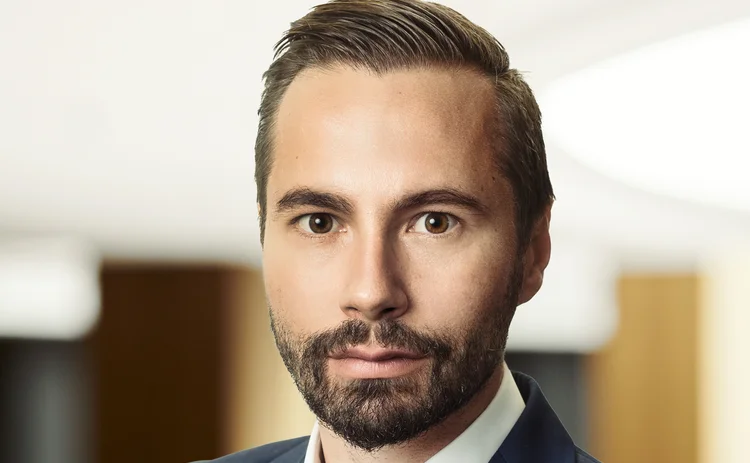
“In the seven years I’ve been working at MET, there has never been a dull day,” says Antoine Servais, the company’s head of risk management. “The firm has evolved extensively in that time, entering different markets and geographies and constantly positioning itself for growth.”
In 2024, MET entered into a 10-year free-on-board LNG purchase agreement with Shell, enabling it to supply its European customers with US LNG. The firm is also in partnership with Denmark’s Celsius to build and jointly own one LNG carrier, which is scheduled to be delivered in 2027.
The firm, which operates renewable, as well as thermal power assets, is also an owner and operator of battery assets in Europe and is offering battery energy storage system (BESS) tolling agreements in many European countries.
Energy Risk caught up with Servais to find out more about his role and approach to risk management.
What does a typical day look like for you?
As everyone knows, the risk world currently is very busy due to intense geopolitical tension and change. But in the seven years I’ve been working at MET, there has never been a dull day. The firm has evolved extensively in that time, entering different markets and constantly positioning itself for growth. So, things are changing all the time, which makes my job interesting.
With this expertise and around three years of crisis events, our risk team felt quite well prepared when the Middle East conflict started. I think the normal market condition now is to be volatile
In terms of structure, I always have an early morning call with our analysts to make sure I’m fully aware of any changes and potential changes in the market. This looks at not just the commodities we cover but the main macro events that are impacting our work. I need to understand what a change in regulation, or potential change in supply and demand, or monetary policy might do to our portfolio. This helps me in my job of making sure the risk we have is transparent to our management and that we can explain our market, credit, financing and operational risk to any key stakeholder in the company.
Then I will be involved from a risk perspective in the many different initiatives the company is involved in, like entry into new markets for example, or our move into chartering. We’re taking delivery of our first LNG carrier next year. We need to be sure we’re growing the business in a sustainable way.
How has heightened geopolitical risk impacted your role?
The three impacts that everyone has had to manage have been higher volatility – which leads to higher risk; potentially higher financing requirements from margin calls to working capital; and credit. In other words, market risk, financing risk and credit risk.
Luckily, MET had already developed tools that gave some joined-up insight into these three risk areas before the 2022 energy crisis, so we were able to deal with that crisis optimally. For example, we had created an inhouse tool that allowed us to understand the initial margin and potential variation margin of any position. We also had a tool that allowed us to look across all our positions and identify, for example, which counterparties we could offset some of the risk with and be able to manage that dynamically to support our exchange for physical (EFP) processes.
With this expertise and around three years of crisis events, our risk team felt quite well prepared when the Middle East conflict started. I think the normal market condition now is to be volatile.
In the event of another market shock, do you feel you would be able to quickly understand your exposures?
It’s important to understand the portfolio impact of an event. As an integrated company, we have physical and virtual assets and we have physical shorts where we’re selling gas and power to end customers across Europe. While a certain position might suffer in one division, it might be offset elsewhere.
We have a system that allows us to slice and dice our exposure into many, many different books. We have over 400 portfolios in the company, and any portfolio is a different strategy. We can aggregate certain strategies to help us quickly identify the risk that we’re facing in a certain market or product.
We can go to the lowest level of granularity to understand the decorrelation risk across markets, and look at all the measures we monitor continuously, like profit at risk, cashflow at risk, value at risk etc and see how they would be impacted by events. For example, it would be important for us to look at the impact of a very prolonged closure of the Strait of Hormuz. What would it do to shipping, how would it impact the JKM/TTF [Asian/European natural gas benchmarks] spread. What are we doing to manage the short-term impact on the winter TTF contract in Europe? How is our portfolio made up to manage this impact through our storage capacity, and how will our power assets react? What is our hedge level etc?
Today, a good risk manager needs to understand the market every bit as well as a trader or originator. They also need to take a more holistic approach than individual traders, enabling a full portfolio view
Today’s unpredictability leads to a potentially very wide distribution of outcomes in models? How is this impacting your modelling and your thinking?
We have a lot of traditional tools and metrics, such as at-risk measures, stress tests, decorrelation risk and standard sensitivities assessment, but I will always go back to fundamentals and try to understand their impact on our positions. How will supply and demand be impacted by events such as renewed tension around Iran, and what could the potential, realistic scenario be that we are trying to stress? How we manage the wide distribution of outcomes starts with properly understanding our position and the tools available to us to mitigate the risk we’re exposed to. This could be a liquidity stress test, which is something we’ve been developing recently. We’ve been looking at how wide a bid/offer spread might go at a time of market stress and the cost to us of crossing it.
We don’t build these things to know the future, but to create a structured basis for a decision, trying to understand our vulnerabilities and where additional hedging or management action might be required.
Since 2022, we’ve focused more heavily on scenario analysis, but it’s all based on potential changes in fundamentals. For example, if the Strait of Hormuz remains closed for many more months, what is the 5% case, what is the 75% case? Then we discuss that with our commercial team so that we’re not coming up with a number that no one understands and that the stress scenario is shared and commonly understood. This is very important and I think this has underpinned MET’s success over the past couple of years.
How has your probability analysis been impacted by the proliferation of ‘unlikely’ market shocks?
I think it comes back to having key metrics that are statistical, derived from the market, or historical data but still linked to sensible supply demand disruption. For example, when the conflict in the Middle East first began on February 28, 2026, we spent the whole weekend with the management team trying to understand all our positions. We didn’t really talk about risk metrics in terms of Var or stress testing. It was much more about understanding how our positions might be impacted, so that on the opening of the market on Monday we had our action list.
Then when events happen and the market moves, you can recalibrate your risk model more easily. It’s about proactive risk management and potentially adjusting your key risk metrics to be more conservative.
What’s been your biggest challenge over the past couple of years?
MET’s expansion into new markets means we always have a new business focus. The speed and scale of our growth is illustrated by our LNG activity: we transacted 30 cargoes a year in 2024, and 123 in 2025. We need to manage the same complexity as a global supermajor might, but with a much smaller team.
We need to manage the same complexity as a global supermajor might, but with a much smaller team
On the power side, the risk management of our battery projects is challenging. We have various battery projects across Europe, particularly in Bulgaria, Poland and Hungary. In terms of risk management, batteries are the right asset for us to acquire and/or manage, because of the flexibility they provide, allowing us to provide the best service at the best price to our customers and to create a more baseload offer linked to our renewable position.
But there still aren’t many risk-management products that can manage batteries across their lifecycle from investment to operation, valuing the asset and representing risk, across the peak-to-peak hours. It’s being developed – like to the top-to-bottom product from EEX – but this is at an early stage.
MET has entered into a lot of projects that keep us on our toes. It’s been very challenging, but fun. For example, we’re developing a business-to-consumer segment for gas and power customers following our 2025 acquisition of Belgian energy and telecom supplier Mega.
We’re also marketing a lot of Henry Hub index products as a way for firms to deal with European security of supply and volatility risk. From a risk perspective this introduces more FX and interest rate risk as well.
When you are considering battery projects, how far forward do you look? Do you consider other firms’ projects and cannibalisation?
Yes, definitely, you have to consider what others are doing in the market as well. Most of our involvement in batteries is not as an asset to be developed and sold, but as an asset to provide flexibility and hedging benefit for our portfolio. So, we’d look out around five years, sometimes 10. On the risk side, it’s important to understand the cannibalisation risk and to fully understand the supply and demand of the country. Batteries are a natural hedge for renewables, so you need to understand the stack in every country and how this is potentially supported by regulation or government support and its growth outlook. You need to understand not only what you can generate on the intraday market, but also what you can generate through ancillary services, so you need to understand the ancillary services rules in each country.
As it’s a physical asset, you also need to understand the life expectancy and how you can extract as much value as possible from its physical operation.
The 2022 energy crisis reminded the industry of the importance of fully understanding the flexibility risk that you onboard through pricing contracts with counterparties
Batteries come with their own modelling requirements and firms are still working out how to model potential service revenue and the intraday value of those assets over the 10 years. It’s likely to require scenario analysis and an investment case based on a realistic or conservative assumption.
What’s your approach to managing regulatory risk?
We take both a centralised and de-centralised approach. We have local teams on the ground that would know if a change in regulation is coming up and how it would impact trading in those local markets, and we also have a co-ordination board that oversees regulation as a whole. Then we use external legal advice if we come across, for example, a niche topic where we don’t have the expertise.
One regulation we’re following closely is the EU’s Regulation on Wholesale Energy Market Integrity and Transparency where the revised framework is increasingly stringent around transaction reporting, algorithmic trading and the quality and traceability of data. The direction is understandable but implementing it is quite operationally demanding. In 2026, we now have much more data than five years ago. So, I think it’s important to keep the lines of communication open between the regulator and those people implementing the regulation at their firms in order to build something that is really fit for purpose.
How do you achieve optimal communication between risk and the commercial and management teams?
MET is quite a lean organisation so I’m part of the senior management and we talk to the senior stakeholders of the company on an ongoing basis to make sure they understand the risks we’re running. There’s a closed loop between management, the commercial team and the risk team, but with risk as an independent function that doesn’t own commercial’s decisions. We need to articulate clearly the position we have and provide the portfolio view because our commercial teams are focused on particular markets and don’t have a holistic view of the portfolio.
The importance of risk is being able to match those two and to communicate how particular events might impact our portfolio, and importantly, give them some view on what action to take if we want to reduce this risk.
Are you using AI in the risk management function?
Yes, we use AI on a daily basis. We also think a lot about our internal policy, how to manage data protection and make sure people are using it in a sustainable way and not building black boxes etc. AI is super useful in risk, not to replace people but to help us provide metrics and output and have faster access to robust analysis. But we should not underestimate the work that is required to double-check the output and the analysis made by AI.
To what extent do you get involved in supply-chain risk management?
Supply risk for us is mainly counterparty risk, so it’s important to fully understand your exposure and have metrics around this potential future exposure in case of a counterparty default.
The ideal relationship [between risk and commercial] is one of constructive tension with risk having the same teeth as commercial
On the LNG side of the business, for example, most of our new suppliers are now coming from the US, so we carry out Know-Your-Counterparty due diligence as well as checks for creditworthiness.
The 2022 energy crisis reminded the industry of the importance of fully understanding the flexibility risk that you onboard through pricing contracts with counterparties. For example, if you purchase at a fixed price for the next five years and the market goes through the roof and your supplier defaults, you end up with effectively a short position in a rising market, which you don’t want.
The other angle of supply-chain management for us is to make sure that we are fulfilling our obligations to our customers and providing security of supply at the lowest cost possible. For us, this is really linked to the optionality we have in our portfolio. For example, one of our real asset options is gas storage, which we have in almost every country in which we operate as a supplier with a short position. This gives us flexibility and helps manage supply risk to some extent.
There isn’t always good visibility into the optionality in energy supply contracts especially if they were negotiated a long time ago. How do you make sure you understand the opportunity and risk in every contract?
On the sales side, we’ve done a tremendous amount of work around creating clear visibility of this risk. Every standard contract has a specific clause around flexibility, pricing and tenor. We have a dedicated risk team that focuses on our sales division and they have created this framework. We try to value and stress this optionality, so it gives us an indicator of the maximum amount of flex that we can onboard.
Do you see a growing link between enterprise risk and traditional financial risk?
Absolutely. Market, credit, liquidity, operational, regulatory and strategic risk are increasingly interacting. A geopolitical event may disrupt physical supply. The closure of the Strait of Hormuz caused prices to rise sharply, which increased collateral requirements on exchange and often with counterparties. So, there was credit and counterparty risk, rising prices and additional operational pressure all at the same time. Looking at each independently doesn’t give you a full picture of the portfolio.
It’s always about identifying risks at portfolio level and asking if we are happy to carry that risk or do we want to mitigate it through hedging or other mitigation methods.
What’s the biggest change you’ve seen in risk management over the years and what do you think is next?
Around 15 years ago risk management was mainly about using different metrics to report and explain risk. Today, a good risk manager needs to understand the market every bit as well as a trader or originator. They also need to take a more holistic approach than individual traders, enabling a full portfolio view.
Risk managers today are usually in more of a partnership role with commercial teams than was the case a few years ago. However, the ideal relationship is one of constructive tension with risk having the same teeth as commercial.
We also need to progress the quantitative aspect of our roles, harnessing AI to create better data platforms and metrics that enable better business decisions.
More on Risk management
Energy supply chain challenges prompt risk management rethink
As supply chain challenges grow, energy risk managers are taking a more dynamic and holistic approach to managing and anticipating supply chain risk, say Sapna Amlani and Stephen Golliker at Moody’s

Energy Risk Europe Leaders’ Network: the challenge of unpredictability
The European Leaders’ Network, sponsored by Engie, convened in London on June 29, 2026, and focused on the impact of geopolitical tension, price volatility and policy uncertainty on European energy markets.

Break down silos to manage geopolitics – risk managers
Risk Live: Experts says scenario planning helps identify who has information needed in a crisis

Treat AI models as would-be hackers, says quant
Risk Live: Models capable of “strategic deception” require different risk management, says former Risk.net quant of the year

AI autonomy may redefine risk management roles
Risk Live: Machine validation of autonomous processes may emerge “relatively soon”, EIF risk chief says

Managing extreme volatility in commodities
Persistent volatility requires a rethink of technology architecture, says Murex head of market risk practice

Commodity volatility prompts a rethink of risk frameworks
Commodity market volatility is exposing the cracks in firms’ risk management frameworks and policies

Asian banks close out energy clients as Iran war bites
Firms with short jet fuel positions faced losses up to $100 million as initial margin soared 566%