
Feature

Uncleared margin rules threaten E&P hedging
Exploration and production companies can find it difficult to satisfy collateral demands when looking to hedge their output using derivatives. Now, Dodd-Frank threatens to make this even harder with margin requirements for uncleared trades. Alexander…

The uncertain impact of an SPR release
During September, speculation about a possible withdrawal from the US Strategic Petroleum Reserve hit boiling point. Although such a release now appears to be unlikely, Jay Maroo investigates the impact any future withdrawal might have on oil traders and…

Banks retreat from commodity derivatives
Increasing capital requirements and other regulatory constraints are cutting the headcount and risk-taking ability of banks in commodity and energy derivatives. Might this diminished role pave the way for less regulated participants to take their place?…

The unreliability of oil price forecasting
Oil price forecasts are notoriously unreliable, making life difficult for energy market participants attempting to manage their risks. Alexander Osipovich explores the reasons why analysts struggle to predict future prices

Using credit valuation adjustment to set limits
In their previous article, Carlos Blanco and Michael Pierce introduced the concept of credit valuation adjustment (CVA). In this next instalment, they explore CVA allocation methods and discuss alternative structures using CVA to set limits, credit…

Influx into Italian electricity
Interest in Italian power trading has picked up lately, according to market participants. Nonetheless, the market remains dogged by challenges, including a lack of exchange liquidity and excess supply in the midst of an economic slump. Gillian Carr…
As banks retreat who will dominate US power trading?
Squeezed by the Volcker rule and Basel III, banks have been pulling back from US electricity markets. Who will become the new power-trading champions, and should hedgers be worried about liquidity? Alexander Osipovich reports
QE3: The next big driver for oil prices?
Quantitative easing has been touted as the next big driver of oil prices. However, analysing and predicting the market behaviour it actually generates is difficult. Jay Maroo talks to experts about what they expect from QE and how this might impact risk…
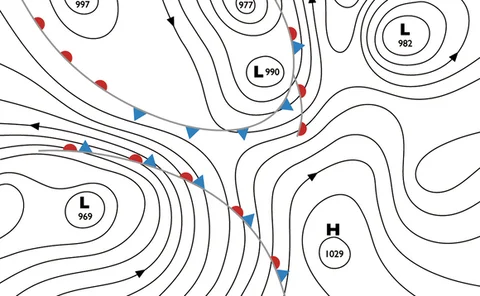
Energy firms tune in to weather forecasts
As weather forecasting becomes more accurate, utilities and banks are increasingly turning to it – not only to predict power and gas demand – but also to find arbitrage opportunities, writes Gillian Carr

Lack of critical mass in biomass
Growth in the use of biomass has led clearing houses to list derivatives referencing the organic fuel source, while some experimentation has also taken place within the over-the-counter markets. But these efforts are yet to yield substantial success. Jay…

Is risk modelling keeping up with the energy market?
Lean times in energy and commodity derivatives trading have caused a cutback in the amount of time and resources spent on energy risk modelling – a worrying trend that could leave firms unprepared for future market challenges, argue some experts. Mark…

Credit valuation adjustment for energy and commodity derivatives
This is the first of a two-part series on credit valuation adjustment (CVA). In this piece, Carlos Blanco and Michael Pierce introduce the concept of CVA and show how to calculate CVA at the trade and portfolio levels
A Texas-sized challenge
Demand response could help resolve Texas’ shortage of generation capacity, but how should the Lone Star state retool its power markets to bring about more demand-side participation? The answer will have nationwide implications, Alexander Osipovich finds

Outlook for freight derivatives market
Liquidity in the dry bulk freight derivatives market dried up rapidly this year with many players exiting the market. Jay Maroo talks to market experts about their outlook for the market now and what needs to be done to kick-start it

Does commodities floor trading have a future?
Once the beating heart of global energy markets, the Nymex trading floor now seems to be in its death throes. Alexander Osipovich asks how much longer open outcry has to live – and whether we should be sorry to see it go

New breed of upstream oil & gas firms have increased appetite for hedging
The growth of master limited partnerships in the North American energy sector is creating a new breed of exploration and production companies with an increased appetite for hedging. The biggest of these, Linn Energy, has hedged 100% of its production out…

Energy Risk interview: chief fund manager at Japan's Astmax
Tetsu Emori, chief fund manager at commodities-focused asset manager Astmax, talks to Energy Risk about the firm’s trading strategy and his commodities outlook for Asian investors

Outlook for commodity trading in Asia
Commodities trading in Asia has grown significantly with corporates looking eastwards for new opportunities and growth. But an uncertain global climate and regulatory differences provide challenges. Gillian Carr reports

Energy firms gear up for new data management requirements
Upcoming regulatory reporting requirements will mean a vast increase in the amount of data being handled by energy companies and most will require updates to their existing systems. Gillian Carr speaks to industry experts about what to expect

Commodity hedging's PR dilemma
Media coverage of hedging is often flawed, distorted or downright wrong, and companies face huge challenges in managing public perceptions of their hedge programmes, Alexander Osipovich finds

Five myths about the build or buy debate for energy risk and valuation models
Building additional risk and valuation functionality for existing ETRM systems is very often necessary, but decisions to develop it internally are often flawed, argues Chris Strickland

Growing pressure to de-link European oil and gas prices
Gazprom’s latest renegotiations of its long-term gas supply contracts resulted in lower prices for the buyers, but no attempt to move away from oil indexation. But with spot gas prices in Europe forecast to remain depressed, the pressure to de-link oil…

Energy companies increase weather hedging
As temperatures rise and extreme events grow more common, energy companies have stepped up their hedging of weather risk, according to market participants. Alexander Osipovich reports

European power market: CWE's next challenges
The central-western European market is at the heart of power trading in Europe and is something of a blueprint for plans to create a single European electricity market. With market coupling progressing well, other challenges now need to be addressed,…