Seeking a systemic role
Sponsored Q&A: Banca IMI

This article was paid for by a contributing third party.

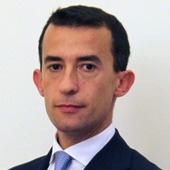
By overhauling old practices and creating a dynamic new culture, Banca IMI hopes to place itself at the centre of the energy trading system. Stefano Rivellini, global head of commodity sales (pictured), explains how, by investing heavily in the physical energy complex, the bank is offering clients balance-sheet transparency, increased liquidity and ready access to markets.
 Energy Risk: Could you give some background on Banca IMI? Which markets and underlyings do you operate in?
Stefano Rivellini: Banca IMI is the investment bank of the Intesa Sanpaolo Group. It has been active in the commodities sector since 2005, with increasing volumes and market share. The bank has always traded in derivatives, but the big boost in volumes came after we started the physical gas trading initiative in July 2015.
Energy Risk: Why is Banca IMI ramping up its presence in commodities when most banks are scaling back?
Stefano Rivellini: The answer is closely linked to the role Intesa Sanpaolo and Banca IMI have in the Italian and international markets, that of enabling corporates to access these markets and build their industrial business. That is why we entered the physical gas market. It was not a trading or a speculative decision, it was a way of satisfying client requests.
The gas market has a large cash imbalance because clients need to buy gas before selling to final clients. It’s a really credit-intensive market, where liquidity access can be very difficult.
Energy Risk: What is Banca IMI doing differently to other banks?
Stefano Rivellini: One of the main reasons a lot of financial players left the market was the regulatory framework disallowing the ownership of physical assets.
Our approach has always been completely different. We are entering the market to complete our offering and to protect our lending to the corporate. We don’t have clients for whom we are investing in terms of credit lines for derivatives – that is, physical products without the lending. For us, being in the physical market is a way of enhancing our clients’ capability to pay back their debt. It is a commercial decision, not a trading one.
Energy Risk: To what do you attribute your success in this year’s Energy Risk Commodity Rankings?
Stefano Rivellini: We have a very young and passionate team with dedicated structuring, trading, accountancy and legal support. I always say that our mantra is “client first”, and this mantra is probably the reason for our success.
Energy Risk: What do you see as the key trends in the market now and what is your focus as a result?
Stefano Rivellini: The macroeconomic environment is extremely complex. With depressed demand and volatile underlyings, clients are always trying to reduce their costs of funding and maintain their liquidity access. That’s why we have three main areas of focus. The first is counterparty risk reduction, the second is the big trend in working capital reduction, and the third is what we call cashflow optimisation dynamics.
We think these are the main methods to improve risk management for corporates. We offer a solution to increase balance-sheet transparency in a market where systemic risk can be extremely harmful.
Energy Risk: What other initiatives does the bank have in commodities?
Stefano Rivellini: The bank as a whole is investing in the energy sector, not only with the capital markets physical gas project, but our project finance team also closed an important deal last year with a corporate called Ital Gas Storage. This can be considered a result of a new cultural approach within the bank and an extremely strong awareness of market dynamics.
Energy Risk: What do you see as the main challenges lying ahead for the industry?
Stefano Rivellini: For the energy complex, credit will continue to be a major challenge that we hope we are well placed to help our clients address.
Energy Risk: What are the next steps for you?
Stefano Rivellini: Given the big success we have had on the physical gas side, we are thinking of expanding our offering of physical products. So, first of all, after our trading in gas for the Italian and Dutch markets, we will probably move on to other products and to other markets. At the same time we will move to other physical underlyings such as power or emissions, but it really depends on client requests because “client first” will remain our mantra.
More on Risk management
Energy risk teams adapt hedging practices amid volatility
Risk managers at European power and gas firms are taking new approaches to hedging amid today’s turmoil and uncertainty. Mark Nicholls reports
CRO interview: Antoine Servais
MET Group's Antoine Servais discusses the impact of geopolitical risk on his workflow, his approach to volatility, and the challenges of leading risk management at a rapidly expanding organisation
Energy supply chain challenges prompt risk management rethink
As supply chain challenges grow, energy risk managers are taking a more dynamic and holistic approach to managing and anticipating supply chain risk, say Sapna Amlani and Stephen Golliker at Moody’s
Energy Risk Europe Leaders’ Network: the challenge of unpredictability
The European Leaders’ Network, sponsored by Engie, convened in London on June 29, 2026, and focused on the impact of geopolitical tension, price volatility and policy uncertainty on European energy markets.

Break down silos to manage geopolitics – risk managers
Risk Live: Experts says scenario planning helps identify who has information needed in a crisis

Treat AI models as would-be hackers, says quant
Risk Live: Models capable of “strategic deception” require different risk management, says former Risk.net quant of the year

AI autonomy may redefine risk management roles
Risk Live: Machine validation of autonomous processes may emerge “relatively soon”, EIF risk chief says

Managing extreme volatility in commodities
Persistent volatility requires a rethink of technology architecture, says Murex head of market risk practice