
US cannot cope with power demand: Nerc
The Corporation warned that unless additional resources are brought into service, some areas could fall below their target capacity margins within two or three years.
The report says that peak demand for electricity in the United States is forecast to increase by almost 18% (135,000 MW) in the next 10 years – enough energy to power more than 100 million homes on an average day. Yet committed resources to meet demand, including demand response programmes, are projected to increase by only 12.7% (123,000MW).
Nerc warns that areas such as California, the Rocky Mountain states, New England, Texas, the Southwest and the Midwest could fall below their target capacity margins within two or three years if additional supply-side and demand-side resources are not brought into service.
"We are at the stage where emergency situations are becoming more frequent," said Rick Sergel, president and CEO of Nerc. "Though some improvements have been made, we are requiring our aging grid to bear more and more strain, and are operating the system at or near its limits more often than ever before. As operating margins decrease, we are limiting our ability to manage unplanned events like equipment failures and extreme weather," Sergel said.
Nerc also warns that projected transmission additions still lag demand growth and new generation additions in most areas. Transmission miles are projected to increase by 8.8 % (14,500 circuit miles) in the United States and 4.8% (2,250 circuit miles) in Canada over the next 10 years.
While this is significantly more planned transmission than projected in last year's assessment, financing, pricing, cost allocation, siting, permitting, and building new transmission lines are challenged by a “Not in My Back Yard” attitude, said Sergel. "NIMBY is becoming NIMS: Not in My State,” he said. “Reliability of the power grid in one state affects reliability in other states too, due to the interconnected and interdependent nature of the power grid."
The report also pointed towards a looming talent drain with 40% of senior electrical engineers and shift supervisors in the electricity industry being eligible to retire in 2009, according to a Hay Group study.
It also pointed to Florida, Texas, the Northeast, and Southern California being overly reliant on natural gas as a fuel for electricity generation.
Nerc noted that wind and solar are becoming increasingly attractive generation resources, due to their ability to provide fuel mix diversification and greenhouse gas emissions reductions.
More on Electricity
Energy Risk Europe Leaders’ Network: the challenge of unpredictability
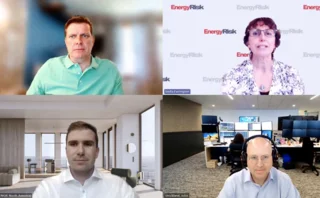
The European Leaders’ Network, sponsored by Engie, convened in London on June 29, 2026, and focused on the impact of geopolitical tension, price volatility and policy uncertainty on European energy markets.

Energy Risk Debates: Ercot’s RTC+B market design
Six months into this significant structural reform, the panellists talk about experiences so far
Next-gen PPA contracts reshaping European power markets
As energy market participants seek new ways of capturing value from volatility, new skills are required to structure and price increasingly complex power purchase agreements

Ercot reforms ace winter but Iran conflict and summer pose bigger test
Ercot’s RTC+B reform passes Storm Fern test – now market participants brace for extended Middle East conflict and high-load summer months

Interest in battery and flexibility soars in European energy markets
Energy traders are structuring bespoke contracts around Bess and flexibility that facilitate new ways of managing and sharing risk in this nascent market
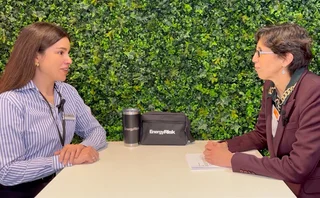
Axpo interview: the rise of flexibility contracts in European power
Axpo’s Domenico Franceschino talks to Energy Risk about flexibility contracts, battery optimisation and the role of risk management in valuing these bespoke products
US power markets grapple with surging AI demand
Through rising demand and increased market participation, technology giants are transforming US power markets

CRO interview: Shawnie McBride
NRG’s chief risk officer Shawnie McBride discusses the challenges of increasingly interconnected risks, fostering a risk culture and her most useful working habits
