Base metals house of the year: BNP Paribas
Energy Risk Awards 2017: BNP Paribas's metals expansion strategy pays off
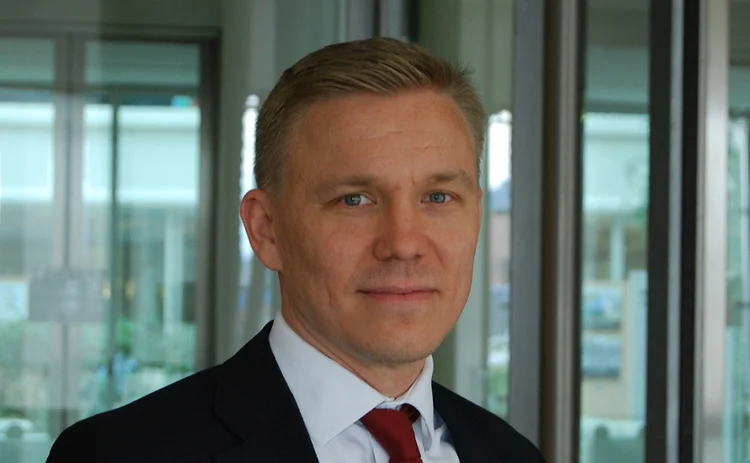
Moving the headquarters of its metals business to Asia in 2016 has propelled BNP Paribas’s (BNPP) expansion in the market, according to Mikko Rusi, the bank’s Singapore-based global head of metals. The move was made in response to the growth in consumption of physical base metals in China, as well as increased onshore futures trading activity in recent years. As a result, “metals price formation is increasingly happening in Asian time”, Rusi says. Through BNP Paribas (China), the bank is also able to work with clients in mainland China, offering transaction settlements in renminbi.
The bank has also been expanding its reach into growing metals markets such as cobalt, which has attracted increased industrial interest of late. “Electric car batteries use cobalt, so a lot of smart money is looking at this market,” Rusi says. Cobalt remains “a minor metal on the London Metal Exchange (LME) with scarce liquidity and inventories”, but it is showing signs of life. BNPP was able to arrange flexible financing solutions for metals traders in the sector last year, leveraging backstop liquidity from the LME to alleviate counterparty credit risk, as well as price and liquidity risk.
“The structure was not new, but it needed fine customisation to work around the limited LME liquidity in cobalt versus the clients’ needs. Also, the constraints imposed by the features of physical inventories made the deal more complex,” Rusi explains. “As such, arranging the hedging element on the LME was the most difficult part, along with being in the position where we knew we could warrant the metal if necessary.”
Rusi says BNPP also conducted a lot of long-dated iron ore hedging business for consumer clients in 2016, taking advantage of the backwardated curve in the market. “Similarly, in coking coal, another very illiquid market, we started offering hedging services to clients such as steel mills that wanted to hedge iron ore and coking coal,” he adds. In addition to supporting clients in more illiquid markets, the bank continued to participate in more actively traded parts of the base metals markets by, for example, initiating a major copper and nickel hedging programme with a large mining company.
By shifting its centre of gravity to Asia in 2016, coupled with ongoing activity in both new and illiquid markets, BNPP has strengthened and deepened its base metals offering to satisfy growing physical and financial needs globally.
More on Awards
Derivatives house of the year: ENGIE
With more than 200 clients across 13 countries in Asia, ENGIE combines deep experience of physical energy markets with cross‑commodity derivatives expertise

Natural gas/LNG house of the year: ENGIE
ENGIE stood out in the Apac gas markets with long‑term contracting activity and continued participation in the Japan Korea Marker benchmark
CTRM software house of the year: Topaz Technology
Topaz Technology’s risk and valuation platform can be used on a standalone basis or integrated across customers’ existing CTRM systems

Precious metals house of the year: Marex
Despite unprecedented market volatility, Marex remained committed to pricing risk across spot, forwards and swaps
Newcomer of the year: Abaxx Exchange
Abaxx Exchange traded more than 1.5 million contracts in Q3 2026 and has launched 18 futures across energy, battery materials and metals
Energy Risk Asia Awards 2026: The winners
Winning firms showcase exemplary risk management skills and services in tumultuous times

Partnership approach pays off for TD Securities
TD outperforms in Commodity Rankings as firms seek support amid market volatility and disruption

TD scoops top slots in the 2026 Commodity Rankings
The top performer in base and precious metals rankings, TD has expansion plans for energy